
Your kitchen is the heart of your Houston home—where coffee brews at sunrise, where homework gets done after school, and where family and friends gather for meals and memories. But when do you know it's time to stop patching problems and invest in a full remodel?
In this comprehensive 2026 guide, we'll walk you through the 10 most common signs Houston homeowners encounter when their kitchen has reached the end of its functional life. Whether you're dealing with outdated cabinets, water damage, poor layout, or simply a space that no longer fits your lifestyle, this guide will help you determine if a kitchen remodel is the right move—and what to expect when you're ready to take the plunge.
Over the past decade, Houston's housing market has evolved dramatically. Homes built in the 1980s and 1990s are hitting the age where kitchens need significant updates. Meanwhile, homeowners who purchased during the 2010–2015 period are discovering that builder-grade finishes don't hold up well in Houston's humidity and heat. Add in the fact that kitchen design trends have shifted toward open-concept layouts, smart appliances, and multifunctional islands, and it's clear why kitchen remodeling is one of the most popular home improvement projects in Greater Houston.
But how do you know if your kitchen truly needs a remodel—or if a few cosmetic updates will suffice? Let's dive into the 10 telltale signs, backed by insights from thousands of Houston kitchen projects completed by Right Choice Remodeling and industry data specific to our local climate, building codes, and real estate market.
Sign #1: Your Cabinets and Countertops Are Outdated
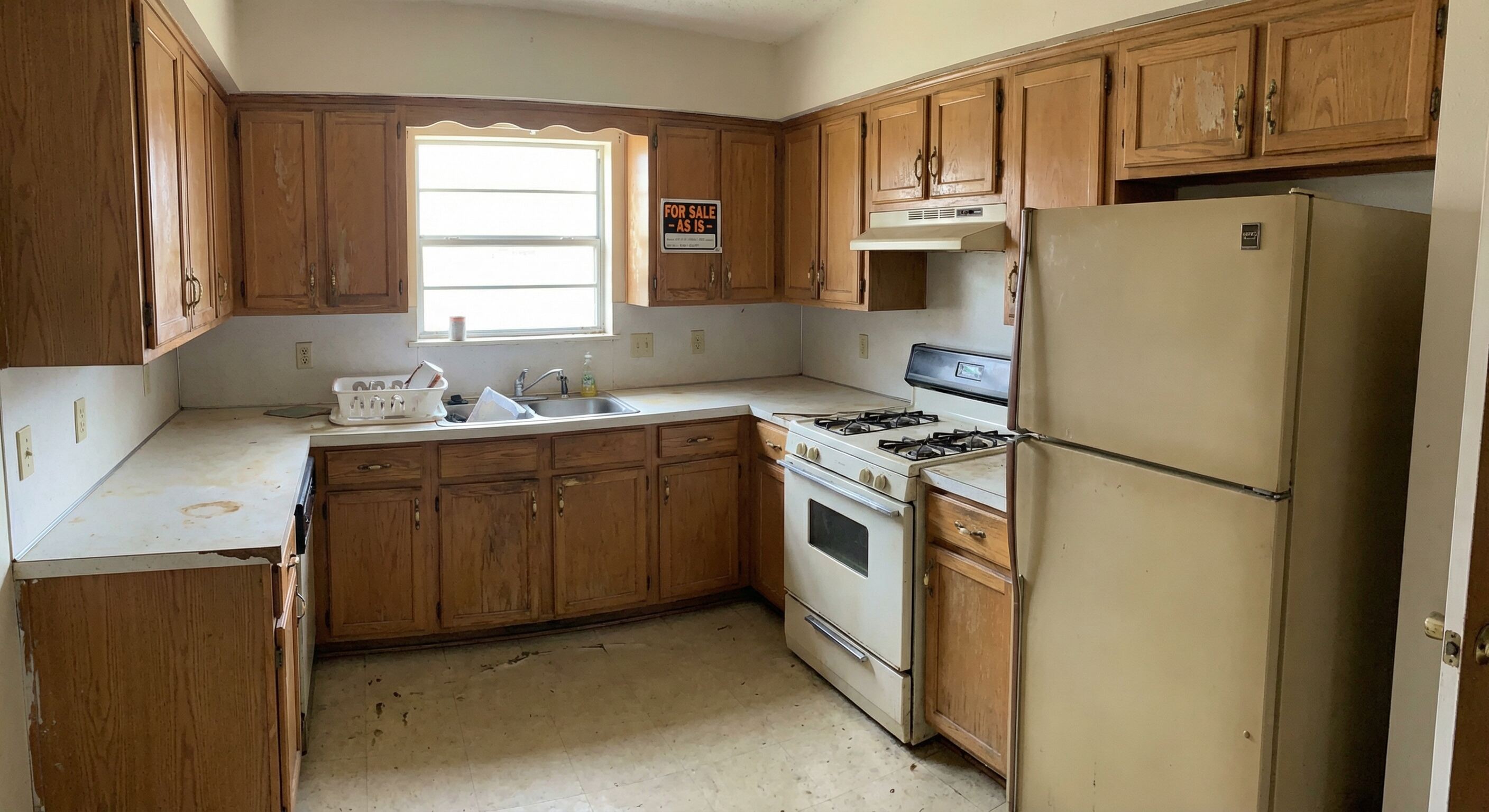
An outdated Houston kitchen showing classic signs: oak cabinets, laminate countertops, and insufficient lighting.
If your kitchen features golden oak cabinets, laminate countertops with visible seams, or backsplash tile in shades of mauve or hunter green, you're likely dealing with a kitchen that was last updated in the 1990s or early 2000s. These materials were once the gold standard, but they've fallen dramatically out of favor—and for good reason.
Why Outdated Materials Matter in Houston
Houston's climate is particularly harsh on older kitchen materials:
- Laminate countertops are prone to delamination in high-humidity environments. The adhesive weakens over time, causing edges to peel and bubbles to form. Once water gets underneath, the particleboard substrate swells and warps, creating an uneven surface that's impossible to repair.
- Oak cabinets with polyurethane finish yellow and darken over time, especially when exposed to Houston's intense sunlight streaming through kitchen windows. The porous nature of oak also makes it susceptible to moisture absorption, leading to warped doors and drawers that stick or won't close properly.
- Ceramic tile countertops (popular in the '80s and early '90s) collect grime in grout lines and are nearly impossible to keep clean. The grout becomes discolored and harbors bacteria, and individual tiles can crack under the stress of heavy pots or hot cookware.
- Brass or gold-toned hardware and fixtures are instant giveaways of an outdated kitchen and can make an otherwise decent space feel tired and behind the times.
What Modern Houston Kitchens Feature
In 2026, Houston homeowners are gravitating toward materials that are both beautiful and practical for our climate:
- Shaker-style cabinets in white, gray, navy, or two-tone combinations. Soft-close hinges and full-extension drawer glides are now standard. Many homeowners are opting for frameless (European-style) cabinets for a sleek, modern look and easier cleaning.
- Quartz countertops are the #1 choice in Houston because they're non-porous (resistant to mold and bacteria), heat-resistant, and available in hundreds of colors and patterns. They require almost no maintenance beyond routine cleaning. Granite remains popular for those who prefer natural stone, while porcelain slabs are gaining traction for their durability and ability to mimic marble or concrete.
- Subway tile or large-format tile backsplashes in classic white, gray, or subtle patterns. Glass tile is also popular for easy cleaning. The trend is moving away from busy patterns and toward clean, timeless designs that won't feel dated in 5–10 years.
- Matte black, brushed nickel, or champagne bronze hardware and fixtures. These finishes hide fingerprints better than polished chrome and add a touch of sophistication without overwhelming the space.
💡 Houston Tip: If you're planning to sell your home in the next 3–5 years, updating cabinets and countertops is one of the highest-ROI improvements you can make. Houston buyers expect move-in-ready kitchens, and an outdated kitchen can cause your home to sit on the market 20–30% longer than comparable homes with updated kitchens.
Sign #2: Water Damage, Mold, or Mildew Issues
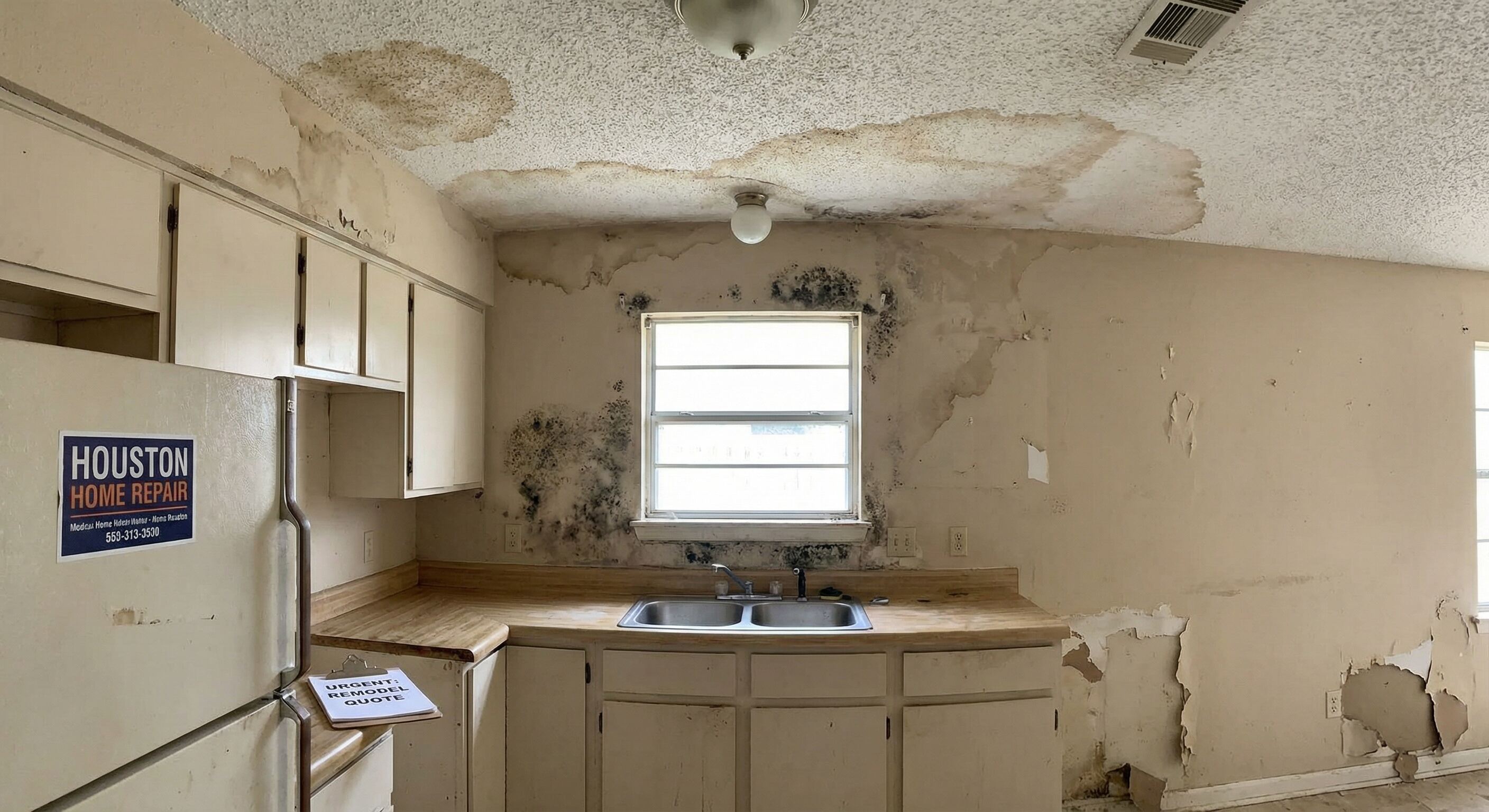
Water damage under a kitchen sink—a common problem in Houston homes due to high humidity and aging plumbing.
Houston's subtropical climate creates the perfect conditions for mold and mildew growth. With average humidity levels hovering between 70–90% for much of the year, kitchens are especially vulnerable. Even minor plumbing leaks or inadequate ventilation can lead to serious moisture problems that compromise your home's structural integrity and your family's health.
Common Water Damage Red Flags
- Warped or bubbling cabinet doors and drawer fronts, especially under the sink or near the dishwasher
- Soft or spongy spots in the flooring near the refrigerator, dishwasher, or sink
- Visible mold or dark staining on walls, ceilings, or inside cabinets
- Musty odors that don't go away even after deep cleaning
- Peeling paint or wallpaper, particularly around windows or along exterior walls
- Condensation on windows or walls during cooking or after running the dishwasher
- Rust stains or corrosion around plumbing fixtures, under the sink, or on appliance connections
Why Houston Kitchens Are Especially Vulnerable
Several factors make Houston kitchens prone to moisture problems:
- High humidity year-round: Even with air conditioning, indoor humidity can remain elevated, especially if your HVAC system is undersized or your home lacks proper ventilation.
- Aging plumbing: Many Houston homes built before 2000 have original plumbing that's reaching the end of its service life. Polybutylene pipes (common in homes built between 1978–1995) are notorious for developing leaks.
- Slab-on-grade foundations: Most Houston homes are built on concrete slabs. When plumbing lines run through the slab and develop leaks, water can seep up through the foundation and into kitchen cabinets and flooring without visible signs until significant damage has occurred.
- Inadequate ventilation: Builder-grade range hoods in many Houston homes are underpowered and simply recirculate air rather than venting to the exterior. This traps moisture and cooking odors inside the kitchen.
How a Kitchen Remodel Addresses Moisture Problems
A comprehensive kitchen remodel gives you the opportunity to fix moisture issues at their source:
- Replace all plumbing lines and fittings, including supply lines to the refrigerator ice maker, dishwasher, and sink
- Install a high-CFM range hood that vents to the exterior (minimum 400 CFM for gas ranges, 300 CFM for electric)
- Add moisture-resistant materials: Use moisture-resistant (MR) drywall behind sinks and dishwashers, and consider waterproof cement board in high-splash areas
- Upgrade to water-resistant flooring like luxury vinyl plank (LVP) or porcelain tile that won't warp or buckle if exposed to moisture
- Install a cabinet base pan under the sink to catch future leaks before they damage cabinetry or flooring
- Add a whole-home dehumidifier or upgrade your HVAC system to better control indoor humidity levels
⚠️ Health Warning: Mold exposure can cause respiratory problems, allergic reactions, headaches, and fatigue. If you or family members experience unexplained health symptoms that improve when you leave the house, hidden mold could be the culprit. A kitchen remodel is an opportunity to address these issues before they become severe.
Sign #3: Insufficient Storage and Counter Space
If you're storing pots and pans in the oven, stashing small appliances in the garage, or fighting for counter space every time you cook, your kitchen isn't working for you. Storage and workspace are the two most common complaints we hear from Houston homeowners considering a kitchen remodel.
Why Storage Matters More Than You Think
Modern kitchens serve more functions than ever before:
- Cooking and meal prep — with more people cooking at home post-pandemic, kitchens need space for multiple appliances, prep zones, and pantry storage
- Homework and work-from-home spaces — kitchen islands and breakfast bars have become de facto home offices and study areas
- Entertaining and socializing — open-concept kitchens need to accommodate guests, bar setups, and serving areas
- Coffee and beverage stations — many Houston families want dedicated space for coffee makers, espresso machines, and wine fridges
Common Storage Problems in Houston Kitchens
How Much Storage Do You Really Need?
As a general rule, a well-designed kitchen should have:
- At least 60 linear feet of wall and base cabinets for a kitchen under 150 square feet
- 15–18 square feet of countertop workspace (not including sink or cooktop areas)
- A minimum 15-inch landing space on either side of the cooktop and refrigerator
- Dedicated zones for prep, cooking, cleaning, and storage
If your current kitchen falls short of these benchmarks, a remodel can dramatically improve functionality. Modern cabinet systems use every inch of space efficiently, and professional kitchen designers know how to maximize storage without sacrificing aesthetics.
💡 Design Tip: Adding even a small 4-foot kitchen island can provide 12–16 cubic feet of additional storage plus 12 square feet of countertop workspace. In Houston's increasingly expensive real estate market, maximizing existing square footage often makes more financial sense than adding square footage through a home addition.
Sign #4: Poor Kitchen Layout and Workflow
Do you find yourself making a dozen trips between the refrigerator, sink, and stove? Does someone else always seem to be in your way when you're trying to cook? These are symptoms of a poorly designed kitchen layout—and they're more common in Houston homes than you might think.
The Work Triangle: Kitchen Design 101
Professional kitchen designers refer to the "work triangle"—the path between your refrigerator, sink, and cooktop/range. In an efficient kitchen:
- The total distance of the three legs of the triangle should be between 13 and 26 feet
- No single leg should be shorter than 4 feet or longer than 9 feet
- Major traffic paths should not cross through the triangle
- Each work zone should have adequate landing and prep space
Many older Houston kitchens violate these principles, resulting in inefficient workflows that waste time and energy.
Common Layout Problems in Houston Homes
1. Galley Kitchens with No Room to Turn Around
Many townhomes and older Houston homes feature narrow galley kitchens with barely 36 inches between opposing cabinets. This makes it nearly impossible for two people to work simultaneously and creates a cramped, claustrophobic feeling.
Solution: If you can borrow even 2–3 feet from an adjacent dining room or hallway, you can transform a galley kitchen into a single-wall layout with an island, dramatically improving functionality and traffic flow.
2. Refrigerator Too Far From Prep Area
We frequently see Houston kitchens where the refrigerator is 15–20 feet from the main prep area, forcing you to walk across the entire kitchen every time you need an ingredient.
Solution: Reconfigure the layout to place the refrigerator within 4–9 feet of the primary prep zone, ideally at the end of a counter run where it won't interrupt workflow.
3. Sink Facing a Wall
Older Houston homes often placed the sink against a wall rather than beneath a window or facing into the room. This feels isolating and cuts you off from family and guests.
Solution: Move the sink to an island or relocate it to face into the main living area. This is a popular feature in open-concept designs and makes cleaning up much more pleasant.
4. Cooktop on an Island with No Ventilation
Some Houston remodels from the early 2000s placed a cooktop on the island without proper downdraft or overhead ventilation. This allows cooking odors and grease to spread throughout the home.
Solution: Install a powerful downdraft vent system or an overhead range hood with adequate CFM rating. Alternatively, move the cooktop back to the perimeter wall where ventilation is easier to install.
5. Dead-End or One-Way Traffic Flow
Kitchens with only one entry point force everyone to walk through the work triangle, creating constant interruptions and bottlenecks during meal prep.
Solution: Create a two-entry kitchen layout that allows people to move through the space without disrupting the cook. This is especially important in Houston homes where the kitchen connects to outdoor living areas and pool decks.
💡 Houston Trend: Open-concept kitchens remain hugely popular in Houston, with homeowners removing walls between the kitchen and living/dining areas. However, be careful not to eliminate all boundaries—many families are now adding partial walls, columns, or ceiling beams to define zones while maintaining sightlines and an open feel.
Sign #5: Outdated or Broken Appliances
If your refrigerator sounds like a jet engine, your oven temperature is wildly inaccurate, or your dishwasher leaves dishes dirty, it's time to upgrade. But beyond functionality issues, outdated appliances can also be costing you hundreds of dollars per year in wasted energy—and dragging down your home's value.
The True Cost of Old Appliances
According to Energy Star, replacing appliances that are 10–15 years old with modern Energy Star-certified models can reduce your energy consumption by:
- Refrigerators: 30–40% reduction (saving $50–$80/year)
- Dishwashers: 20–30% reduction (saving $30–$50/year) plus significant water savings
- Electric ranges and ovens: 15–25% reduction depending on cooking habits
Over a 10-year period, that's $1,000–$1,500 in savings—almost enough to offset the cost of one or two new appliances. And in Houston, where air conditioning costs are already high, reducing heat output from inefficient ovens and dishwashers can further lower your cooling bills.
When to Replace vs. Repair
General rule of thumb: If a repair costs more than 50% of the replacement cost and your appliance is over 8–10 years old, replace it. Here's why:
- Older appliances are more likely to break again within 1–2 years
- Parts for discontinued models become increasingly expensive and hard to find
- New appliances come with warranties (typically 1 year parts and labor, plus extended warranties on major components)
- Modern appliances have better energy efficiency, safety features, and smart connectivity
Most Popular Appliance Trends in Houston (2026)
1. Stainless Steel vs. Panel-Ready Appliances
Stainless steel remains the most popular finish, but we're seeing increasing interest in panel-ready appliances (especially refrigerators and dishwashers) that can be fitted with custom cabinet panels for a seamless, high-end look.
2. Smart Appliances
Houston homeowners are embracing smart technology:
- Refrigerators with interior cameras so you can see what's inside while at the grocery store
- Ovens you can preheat remotely via smartphone app
- Dishwashers that text you when the cycle is complete
- Induction cooktops with precise temperature control and safety features
3. Larger Capacity
Houston families are supersizing their appliances. The average refrigerator in new Houston homes is now 22–26 cubic feet (up from 18–20 cubic feet a decade ago), and 36-inch professional-style ranges are becoming standard in upscale remodels.
4. Secondary Appliances
Luxury Houston kitchens now often include:
- Wine or beverage refrigerators
- Warming drawers
- Steam ovens or convection microwave combos
- Built-in coffee makers or espresso machines
⚠️ Gas vs. Electric in Houston: Houston has historically been a gas cooking city, but induction cooktops are rapidly gaining market share due to their superior performance, safety, and energy efficiency. If you're remodeling and currently have gas, consider whether induction might be a better long-term choice—especially if you have young children or elderly family members in the home.
Sign #6: Damaged or Inadequate Flooring
Your kitchen floor takes more abuse than any other surface in your home. Between spills, dropped utensils, heavy appliances, and constant foot traffic, flooring in Houston kitchens faces unique challenges due to our climate and lifestyle.
Signs Your Kitchen Flooring Needs Replacement
- Visible wear patterns in high-traffic areas, especially in front of the sink and stove
- Loose or cracked tiles that create tripping hazards and allow moisture penetration
- Warped or buckling laminate or hardwood from water damage or humidity exposure
- Stained or discolored flooring that won't come clean no matter how much you scrub
- Grout that's crumbling, cracking, or harboring mold
- Soft spots or squeaking sounds when you walk across certain areas (indicates subfloor damage)
Best Flooring Options for Houston Kitchens
Luxury Vinyl Plank (LVP) — Most Popular
LVP has become the #1 choice for Houston kitchen remodels because it:
- Is 100% waterproof (critical in Houston's humid climate)
- Looks like real hardwood but costs 50–70% less
- Is comfortable underfoot and quieter than tile
- Can be installed as a floating floor (no glue, faster installation)
- Holds up extremely well to scratches, dents, and stains
Expect to pay $4–$8 per square foot installed for quality LVP.
Porcelain Tile — Premium Choice
Porcelain tile remains popular in upscale Houston kitchens, especially in styles that mimic natural stone or hardwood. Benefits include:
- Extremely durable and scratch-resistant
- Water-resistant (though grout lines require sealing)
- Cool underfoot (a plus in Houston summers)
- Available in large-format tiles (24"×48" or larger) for fewer grout lines
Expect to pay $8–$15 per square foot installed depending on tile size and complexity.
Engineered Hardwood — Luxury Option
Real hardwood is not recommended for Houston kitchens due to humidity, but engineered hardwood (a thin layer of real wood over a plywood base) can work if:
- Your home has excellent humidity control (50% or below year-round)
- You're willing to wipe up spills immediately
- You want the authentic look and feel of hardwood
Expect to pay $10–$16 per square foot installed for quality engineered hardwood.
What to Avoid in Houston Kitchens
- Solid hardwood — will warp and buckle in Houston's humidity
- Laminate flooring — not waterproof; edges swell and delaminate when exposed to moisture
- Cork or bamboo — too soft for kitchen traffic; dents easily and doesn't hold up to spills
💡 Installation Tip: When replacing kitchen flooring during a remodel, extend the same flooring into adjacent areas (dining room, hallway) for a seamless, cohesive look. This eliminates awkward transitions and makes your home feel larger and more open.
Sign #7: Poor Lighting
Lighting is one of the most overlooked aspects of kitchen design—yet it's one of the most important. If you find yourself squinting to read recipes, relying on a single overhead light, or struggling to see what you're chopping, your kitchen lighting is inadequate.
The Three Layers of Kitchen Lighting
A well-lit Houston kitchen requires three distinct types of lighting:
1. Ambient (General) Lighting
This provides overall illumination for the entire space. Options include:
- Recessed LED can lights (most popular in Houston kitchens)
- Flush-mount or semi-flush ceiling fixtures
- Track lighting (less common in modern designs)
Rule of thumb: Aim for 1 recessed light per 20–25 square feet of kitchen space, or 50 lumens per square foot.
2. Task Lighting
This illuminates specific work areas where you need bright, shadow-free light:
- Under-cabinet lighting (LED strips or puck lights) for countertop work zones
- Pendant lights over islands and peninsulas (typically 2–3 pendants spaced 24–30 inches apart)
- Interior cabinet lighting for pantries and glass-front cabinets
3. Accent Lighting
This adds drama and visual interest:
- Above-cabinet lighting that washes light up the wall and highlights crown molding
- In-cabinet lighting that showcases glassware or collectibles
- Toe-kick lighting for a modern, upscale feel
Common Lighting Mistakes in Houston Kitchens
- Relying on a single overhead light: This creates harsh shadows and leaves work areas dim
- Pendant lights that are too high or too low: They should hang 30–36 inches above the island surface
- Using the wrong color temperature: Kitchens need 3000K–4000K (warm white to neutral white); anything warmer feels dingy, anything cooler feels sterile
- Not dimming lights: Dimmers allow you to adjust lighting for different times of day and activities
- Ignoring natural light: If your kitchen has a north-facing window or no window at all, you'll need even more artificial lighting to compensate
Houston-Specific Lighting Considerations
Houston's intense sunlight creates unique challenges:
- Windows facing south or west can create glare and excessive heat gain. Consider window treatments like cellular shades or UV-blocking film.
- High ceilings (9–12 feet) are common in newer Houston homes. You'll need more powerful lights or additional fixtures to adequately illuminate the space.
- LED lights are essential in Houston because they produce far less heat than incandescent or halogen bulbs, reducing strain on your AC system.
💡 Smart Lighting Tip: Consider installing smart switches or smart bulbs that allow you to control kitchen lighting via voice commands or smartphone app. You can create custom scenes (morning coffee, cooking, dinner party, cleanup) with a single tap. This is especially useful in Houston's open-concept homes where kitchen lighting affects the entire living area.
Sign #8: Outdated Electrical System
Modern kitchens demand far more electrical capacity than kitchens from even 10–15 years ago. If you're tripping breakers when running the microwave and coffee maker simultaneously, or you don't have enough outlets for all your appliances, your electrical system is due for an upgrade.
Signs Your Kitchen Electrical System Is Inadequate
- Frequent breaker trips when using multiple appliances
- Flickering lights when the refrigerator compressor kicks on
- Outlets that feel warm to the touch or show scorch marks
- Two-prong outlets (not grounded—a serious safety hazard)
- Insufficient GFCI protection near sinks and water sources
- Extension cords running across countertops because there aren't enough outlets
- Inability to add new appliances without upgrading the electrical panel
What Modern Kitchens Need
According to the National Electrical Code (NEC) and City of Houston requirements, kitchens must have:
- Dedicated 20-amp circuits for countertop small appliance use (minimum of 2 circuits)
- GFCI (ground-fault circuit interrupter) outlets within 6 feet of any water source
- Outlets spaced no more than 4 feet apart along countertops
- Dedicated circuits for major appliances: refrigerator, dishwasher, garbage disposal, microwave
- 40–50 amp circuit for electric ranges or 15-amp circuit for gas ranges with electric ignition
- Proper lighting circuits with switches at each entry point
Houston-Specific Electrical Considerations
Many Houston homes built before 2000 have electrical panels that are undersized for modern demands:
- 100-amp service is common in older Houston homes but inadequate if you're adding central AC, electric vehicle charging, or upgrading to a full electric kitchen
- 200-amp service is the current standard and what you should upgrade to during a kitchen remodel if your home still has 100-amp service
- Federal Pacific and Zinsco panels (common in 1970s–1980s Houston homes) are fire hazards and should be replaced immediately
Cost to Upgrade Kitchen Electrical
Typical electrical upgrade costs for Houston kitchen remodels:
- Adding circuits and outlets: $500–$1,500 depending on number of circuits
- Panel upgrade (100-amp to 200-amp): $2,000–$3,500 including permit and inspection
- Rewiring entire kitchen: $2,500–$5,000 depending on kitchen size and access
⚠️ Safety First: Never ignore electrical issues. Outdated wiring and overloaded circuits are leading causes of house fires. If your kitchen has aluminum wiring (common in Houston homes built 1965–1975), have it evaluated by a licensed electrician—aluminum wiring requires special handling and is a known fire hazard.
Sign #9: Your Home Value Is Lagging Behind Neighborhood Comps
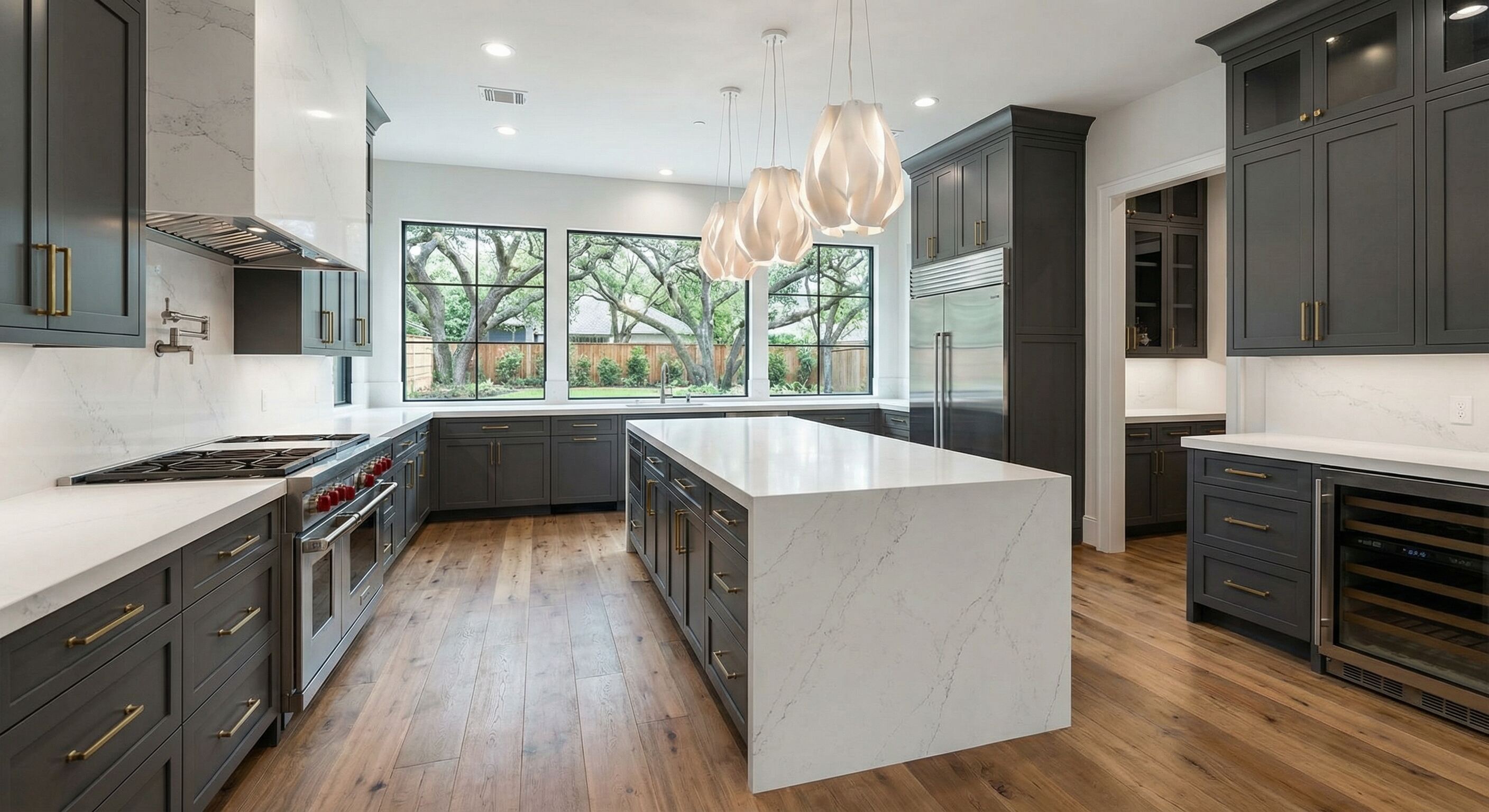
A beautifully renovated Houston kitchen featuring modern finishes, open layout, and designer lighting.
If you're planning to sell your Houston home in the next 3–5 years, an outdated kitchen can be a major liability. Buyers prioritize kitchens above all other rooms, and homes with remodeled kitchens sell faster and for higher prices than comparable homes with original kitchens.
Kitchen Remodeling ROI in Houston (2026 Data)
According to Remodeling Magazine's 2026 Cost vs. Value Report and Houston-specific market data:
What Houston Buyers Want
Based on feedback from Houston realtors and buyer surveys:
- Open-concept layout connecting kitchen to living/dining areas
- Large island with seating (minimum 7 feet long for 3–4 bar stools)
- White or light-colored cabinets (67% of Houston buyers prefer white kitchens)
- Quartz or granite countertops (laminate is a deal-breaker for most buyers)
- Stainless steel appliances (minimum; high-end buyers want panel-ready or pro-style ranges)
- Pantry storage (walk-in pantry is a major selling point)
- Good lighting with under-cabinet LEDs and pendant lights
- Hardwood-look flooring (LVP or tile that mimics wood)
Neighborhood-Specific ROI Considerations
Kitchen remodel ROI varies significantly by Houston neighborhood:
Highest ROI neighborhoods:
- Inner Loop (Heights, Montrose, West U, Bellaire, Meyerland): 75–90% ROI due to high demand and limited inventory
- Desirable suburbs (Memorial, Katy, Sugar Land, The Woodlands): 70–80% ROI in established neighborhoods
Lower ROI neighborhoods:
- Over-improved areas: If your home is already at the top of the price range for your street, an ultra-luxury kitchen won't add much value
- Rapidly changing neighborhoods: If your area is experiencing turnover or declining values, kitchen remodeling may not be the best investment
💡 Pre-Sale Strategy: If you're planning to sell, focus on mid-range finishes that appeal to the broadest buyer pool rather than ultra-luxury upgrades that only a small percentage of buyers will appreciate (and pay for). A $45,000–$55,000 mid-range remodel typically offers better ROI than a $100,000+ luxury remodel unless you're in a very high-end Houston neighborhood.
Sign #10: You Dread Spending Time in Your Kitchen
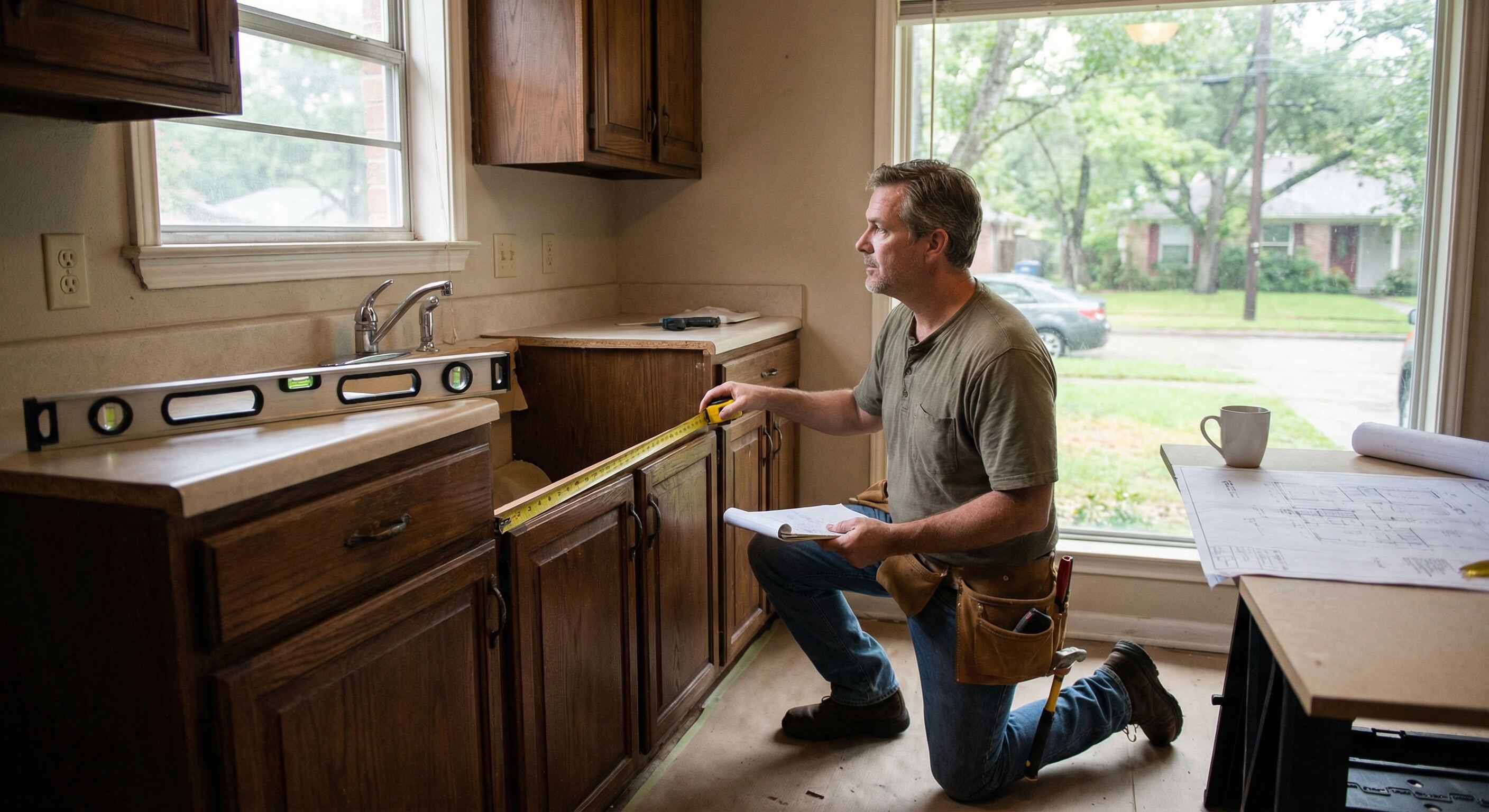
Planning your Houston kitchen remodel with an experienced contractor ensures a smooth process and beautiful results.
This is perhaps the most important sign of all—and the one that homeowners often dismiss as "not a good enough reason." But here's the truth: if you don't enjoy spending time in your kitchen, that matters.
Your kitchen should be a place you want to be. It should inspire you to cook healthy meals, gather with family, entertain friends, and create memories. If instead you find yourself:
- Avoiding cooking at home and eating out more than you'd like
- Feeling embarrassed when guests see your kitchen
- Frustrated every time you try to prepare a meal
- Dreaming about what your kitchen could be
- Spending time in everyone else's beautiful kitchens and wishing yours looked like that
...then it's time to stop waiting and start planning your kitchen remodel.
The Lifestyle Value of a Kitchen Remodel
ROI isn't just about dollars and cents. It's also about quality of life:
- Cooking at home more often saves money and improves your family's nutrition
- Entertaining becomes easier when you're proud of your kitchen and have the space to host comfortably
- Morning routines are smoother when your kitchen is organized and functional
- Home value increases even if you're not selling right away
- Pride of ownership improves — you'll love your home more when the heart of your home works beautifully
When Is the Right Time to Remodel?
There's rarely a "perfect" time to remodel your kitchen. But the best time is typically:
- When you can afford it comfortably without depleting emergency savings or taking on high-interest debt
- When you plan to stay in your home for at least 3–5 years to enjoy the improvements and recoup value
- When other major life changes aren't happening simultaneously (new baby, job change, elderly parent moving in)
- When you've found a contractor you trust and who has availability in their schedule
If you're waiting for the "perfect moment," you might be waiting forever. Start with a free consultation to learn what's possible, how much it would cost, and how long it would take. You might be surprised at how achievable your dream kitchen really is.
Planning Your Houston Kitchen Remodel: Next Steps
If you've identified 3 or more of the signs above, your kitchen is definitely ready for attention. Here's how to get started:
Step 1: Define Your Goals and Budget
Before contacting contractors, spend time clarifying:
- What's your realistic budget? (Include a 10–15% contingency for unexpected issues)
- What problems are you trying to solve? (storage, layout, outdated finishes, functionality)
- What's your timeline? (When do you want to start, and when do you need it finished?)
- What's non-negotiable vs. nice-to-have?
- How long do you plan to stay in this home?
Step 2: Gather Inspiration
Create a vision board or Pinterest collection of kitchens you love. Note common themes:
- What colors and finishes appear repeatedly?
- What layout style appeals to you?
- What special features do you see (coffee station, pot filler, large pantry)?
Step 3: Interview 3–5 Houston Kitchen Remodeling Contractors
Look for contractors who:
- Are licensed and insured in Texas
- Have extensive kitchen remodeling experience (minimum 5–10 years)
- Can show you a portfolio of completed Houston kitchen projects
- Provide references from recent clients
- Offer design services or work with kitchen designers
- Pull permits and handle inspections
- Provide detailed written estimates and contracts
- Offer warranties on workmanship
Step 4: Expect a 4–10 Week Project Timeline
Typical Houston kitchen remodel timeline:
What Does a Kitchen Remodel Cost in Houston? (2026 Pricing)
Kitchen remodeling costs in Houston vary dramatically based on:
- Kitchen size (square footage)
- Scope of work (cosmetic refresh vs. full gut renovation)
- Quality of materials and finishes
- Whether you're reconfiguring the layout or adding square footage
- Labor rates (which vary by contractor and neighborhood)
Houston Kitchen Remodel Cost Ranges (2026)
💡 Budget Tip: The most cost-effective approach for most Houston homeowners is a mid-range remodel with one or two "splurge" items that matter most to you (e.g., a professional-grade range, a stunning quartz island, or custom pantry organization). This gives you the best balance of quality, functionality, and ROI.
Focus your budget where it matters: cabinets (40–50% of budget), countertops (10–15%), appliances (15–20%), labor (20–25%), and everything else (flooring, lighting, plumbing, hardware).
Top Houston Kitchen Trends for 2026
If you're remodeling in 2026, here are the design trends Houston homeowners are embracing:
1. Two-Tone Cabinetry
White or light gray upper cabinets paired with navy, forest green, or charcoal lowers/island. This adds visual interest without overwhelming the space.
2. Oversized Islands with Waterfall Edges
Islands are getting larger (8–10 feet long) and featuring waterfall edges where the countertop extends down the sides. Seating for 4–6 is now standard.
3. Statement Range Hoods
Custom wood hoods, shiplap-clad hoods, or metal hoods with decorative details are replacing generic stainless ventilation.
4. Open Shelving (But Not Everywhere)
One wall or section of open shelves creates a display area for beautiful dishes and glassware, but most Houstonians still want the majority of their kitchen concealed behind cabinet doors.
5. Integrated Appliances
Panel-ready refrigerators, dishwashers, and even range hoods that blend seamlessly with cabinetry for a built-in, high-end look.
6. Warm Metallics
Brass, champagne bronze, and matte gold fixtures are replacing the cooler tones (chrome, brushed nickel) that dominated the 2010s.
7. Smart Storage Solutions
Pull-out spice racks, charging drawers, appliance garages, trash/recycling pull-outs, and custom drawer dividers are all must-haves in modern Houston kitchens.
8. Beverage Stations
Dedicated coffee bars with built-in coffee makers, wine fridges, and bar sinks are increasingly popular, especially in homes with open-concept entertaining spaces.
How to Finance Your Houston Kitchen Remodel
Most Houston homeowners don't have $50,000–$80,000 sitting in a savings account. Here are the most common financing options:
1. Home Equity Line of Credit (HELOC)
Pros: Low interest rates (currently 7–9% in Houston), tax-deductible interest, flexible draw period
Cons: Requires significant home equity, variable interest rates, uses your home as collateral
2. Cash-Out Refinance
Pros: Lowest interest rates, fixed payment, large loan amounts available
Cons: Extends your mortgage term, closing costs ($3,000–$6,000), only makes sense if you can get a rate close to your current mortgage rate
3. Personal Loan
Pros: No home equity required, fast approval (sometimes same-day), fixed rate and term
Cons: Higher interest rates (10–15%), smaller loan amounts (typically max $50,000), shorter repayment terms (3–7 years)
4. Contractor Financing
Pros: Convenient one-stop shopping, promotional 0% APR periods (6–18 months) available
Cons: Rates can be very high after promotional period ends, often requires excellent credit
5. Cash (Savings)
Pros: No interest, no debt, no monthly payments
Cons: Depletes emergency fund, ties up capital that could be invested elsewhere
💡 Financial Advice: Aim to finance no more than 80% of your kitchen remodel, keeping 20% as cash cushion for unexpected costs. Never drain your emergency fund completely for a remodel—keep at least 3–6 months of expenses in readily accessible savings.
Frequently Asked Questions About Houston Kitchen Remodels
Q: Can I live in my home during the remodel?
A: Yes, but expect significant disruption. Set up a temporary kitchen in another room with essentials (microwave, mini-fridge, coffee maker). Plan for increased takeout/dining out expenses. Dust, noise, and lack of running water in the kitchen are unavoidable. Many Houston families stay with relatives for a week or two during the most disruptive phases (demolition and drywall).
Q: Do I need an architect or just a contractor?
A: For most kitchen remodels, a contractor with in-house design services or a partnership with a kitchen designer is sufficient. You only need an architect if you're removing load-bearing walls, adding square footage, or making significant structural changes. Many Houston contractors offer free or low-cost design consultations as part of their services.
Q: What if we discover mold or structural problems during demolition?
A: This is why you need a contingency budget (10–15% of total project cost). Hidden issues are common in Houston homes due to humidity and aging infrastructure. A reputable contractor will document any problems with photos, explain your options, and provide a change order with pricing before proceeding. Never let a contractor "just fix it" without a written agreement.
Q: How long should I expect my new kitchen to last?
A: With proper maintenance, a well-built kitchen should last 15–25 years. Cabinets (if quality construction) can last 25+ years. Quartz countertops are lifetime materials. Appliances typically last 10–15 years. Paint and hardware may need refreshing every 7–10 years. Choosing timeless design over trendy styles helps your kitchen remain attractive longer.
Q: What's the #1 mistake Houston homeowners make when remodeling?
A: Choosing the cheapest contractor bid without verifying credentials, experience, and references. A low bid often means corners will be cut—and fixing a bad remodel costs far more than doing it right the first time. Always choose a licensed, insured contractor with a proven track record and written contracts/warranties.
Q: Should I DIY any parts of my kitchen remodel?
A: Painting, demolition (under contractor supervision), and installing cabinet hardware are safe DIY tasks. Leave plumbing, electrical, gas work, cabinetry installation, and countertop installation to licensed professionals. Houston's humidity makes proper installation techniques critical—DIY mistakes can lead to mold, water damage, and failed inspections.
Ready to Transform Your Houston Kitchen?
If you've recognized 3 or more of the signs above, your kitchen is telling you it's time for a change. A well-planned kitchen remodel can:
- Dramatically improve your daily quality of life
- Increase your home's value by $20,000–$60,000+
- Reduce energy and maintenance costs
- Create a space you're proud to show off
- Enhance safety and functionality for your family
The journey from "we need to do something about this kitchen" to "wow, I can't believe this is our home" is shorter than you might think. With the right contractor, clear communication, and realistic expectations, most Houston kitchen remodels are completed in 6–10 weeks from first demolition swing to final walkthrough.
Don't wait for the "perfect time"—there rarely is one. Start with a free consultation to explore your options, understand costs, and see what's possible within your budget. You might be surprised at how achievable your dream kitchen really is.
Ready to Love Your Kitchen Again?
Get a free design consultation and accurate quote from Houston's trusted kitchen remodeling experts
Licensed · Insured · 15+ Years Experience · 500+ Happy Homeowners
Related Kitchen Remodeling Resources
Houston Garage Conversion Cost Guide
Transform your garage into valuable living space with our complete 2026 cost breakdown and planning guide.
Best ROI Home Improvements in Houston
Discover which remodeling projects offer the highest return on investment in the Houston real estate market.
Kitchen Remodeling Services
Explore our complete kitchen remodeling services, design process, and view our Houston portfolio.